Currently, most protein therapies are administered via frequent intravenous, subcutaneous or intramuscular injections. In chronic diseases where patients require persistent management, these cumbersome, often painful and high-priced injections can create a major treatment gap.
From a technical standpoint, oral delivery of peptides and therapeutic proteins is challenging due to the enzymatic degradation within the gastrointestinal tract and poor absorption into the blood stream.
Proteolytic Degradation
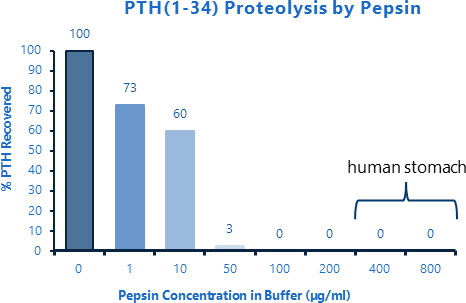
In the acidic gastric environment, most peptides are rapidly cleaved by pepsin
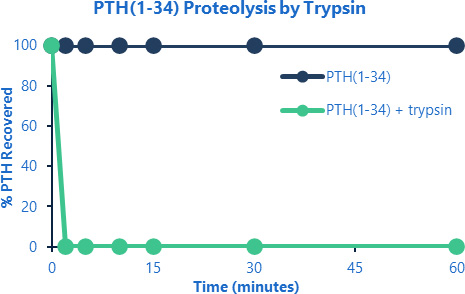
In the small intestine, trypsin and α‑chymotrypsin further degrade peptide drugs
100%
peptide breakdown within a
few minutes of luminal exposure
Epithelial Permeability Barrier
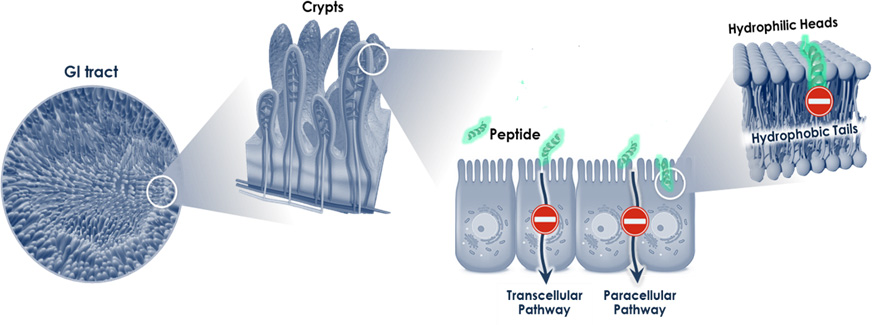
Therapeutic peptides are too hydrophilic to cross the enterocyte barrier transcellularly, and too large to pass through it paracellularly
~0%
typical oral bioavailability
for unformulated peptides
Oral Delivery of Peptide Drugs Has Lagged
Out of >80 approved injectable peptide therapies, there is only one approved oral peptide >4kDa (GLP-1, Rybelsusu00ae)
Our Solution
N-Tab® Entera’s Proprietary Platform is designed to simultaneously stabilize large (4kD+) hydrophilic peptides in the gastrointestinal tract and promote their absorption into the bloodstream.
Unlocking Oral Peptide Absorption:
Two Synergistic Mechanisms of the N-Tab® Platform
The N-Tab® platform overcomes enzymatic degradation and enhances permeability for improved bioavailability.
1. Proteolysis Inhibition
Proteases Blocked.
Peptide Survives.
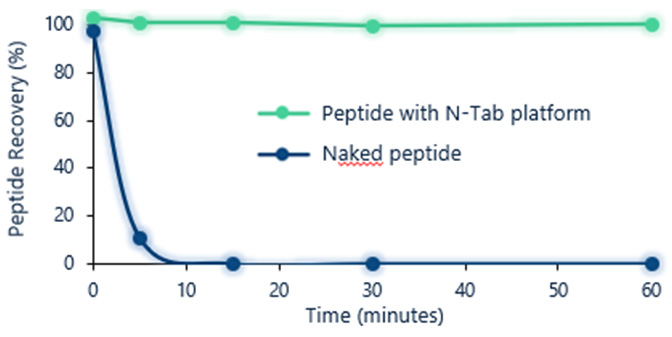
The naked peptide is completely degraded within 5 minutes. With the N-Tab platform the peptide is stabilized in the GI tract
2. Permeability Enhancement
Membrane Fluidity Increased.
Drug Absorbed Systemically.
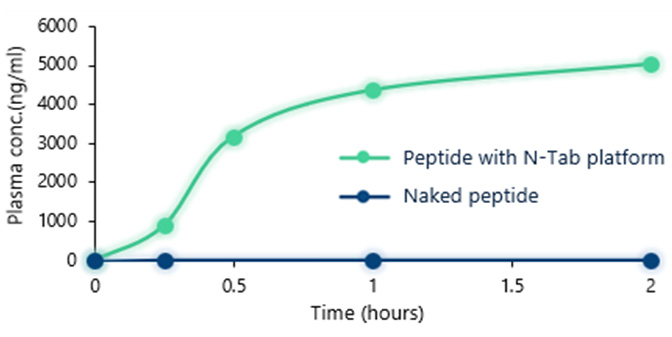
The N-Tab platform transiently increases enterocytes membrane fluidity, enabling transcellular permeation of the peptide through gastric wall
Validated in three Phase 1 and three Phase 2 studies
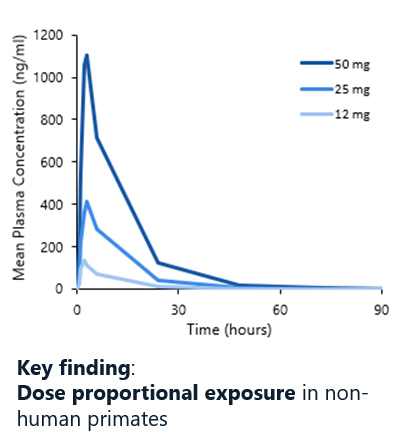
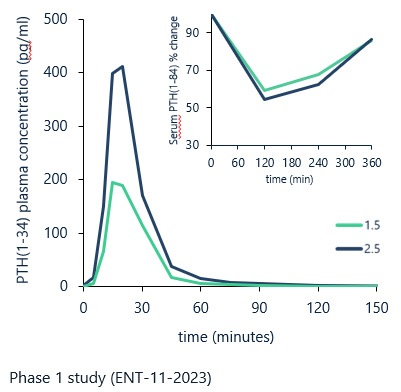
Dose Proportional PK with Corresponding PD Demonstrated in Phase 1
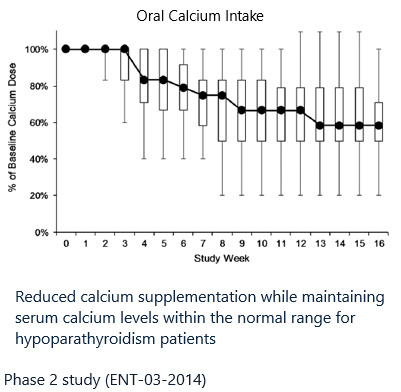
Phase 2 Hypoparathyroidism Study Confirms Platform-Enabled Biological Effect
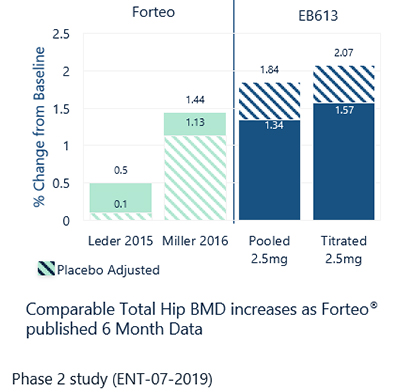
Clinical Endpoints Achieved in Placebo-Controlled Phase 2 Osteoporosis Study
N‑Tab®: Core Platform Advantages
Advantageous Pharmacokinetic Profile
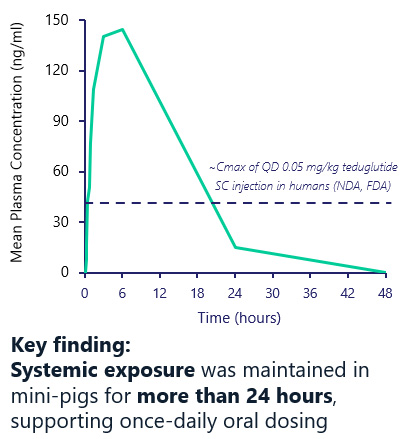
Overcomes oral bioavailability challenges of peptides, enabling therapeutically relevant systemic exposure.
Gastric absorption with rapid onset of action.
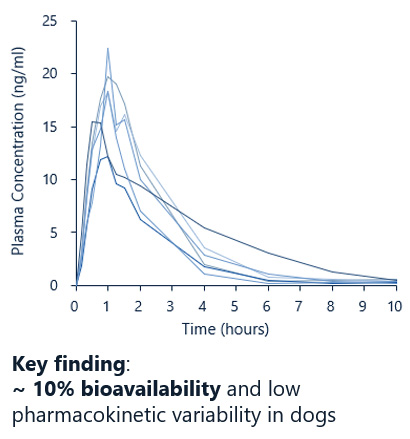
Reproducible PK profile
Clinically Proven
Demonstrated consistent exposure and robust pharmacodynamic responses in clinical studies.
Successful Phase 2 studies in Hypoparathyroidism and Osteoporosis.
Three phase 1 and three phase 2 (n=270)
Broad Applicability
Versatile platform enabling conversion of diverse peptide drugs into oral formulations.
Peptide size range – Feasibility to orally deliver peptides ranging in size from 0.9 kDa to ~20 kDa was demonstrated in vivo.
>10 assets across 7 therapeutic areas
Rapid Development Path
Customized large animal model as a proof-of-concept tool to assess feasibility.
Based on approved pharmaceutical excipients to streamline the regulatory pathway.
Conventional manufacturing equipment and scalable process for commercial supply.
~16-month formulation-to-IND
Safety Profile
Compared with small molecules, oral peptides have greater target receptor selectivity.
The effect on the cellular membrane is short lasting with no local tissue damage to GI tract.
Oral dosing is less immunogenic.
>25,000 doses administered in clinical trials with no serious adverse events attributed to the platform
Patient Compliance Uplift
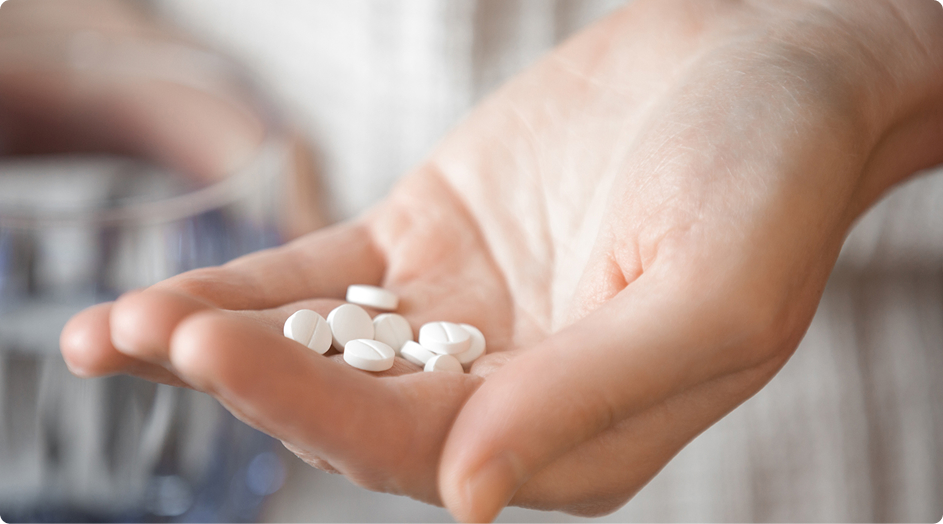
Conventional small once-daily tablet.
Convenient storage.
Oral vs. injectable drives a significant positive impact on treatment compliance and patient quality of life.